
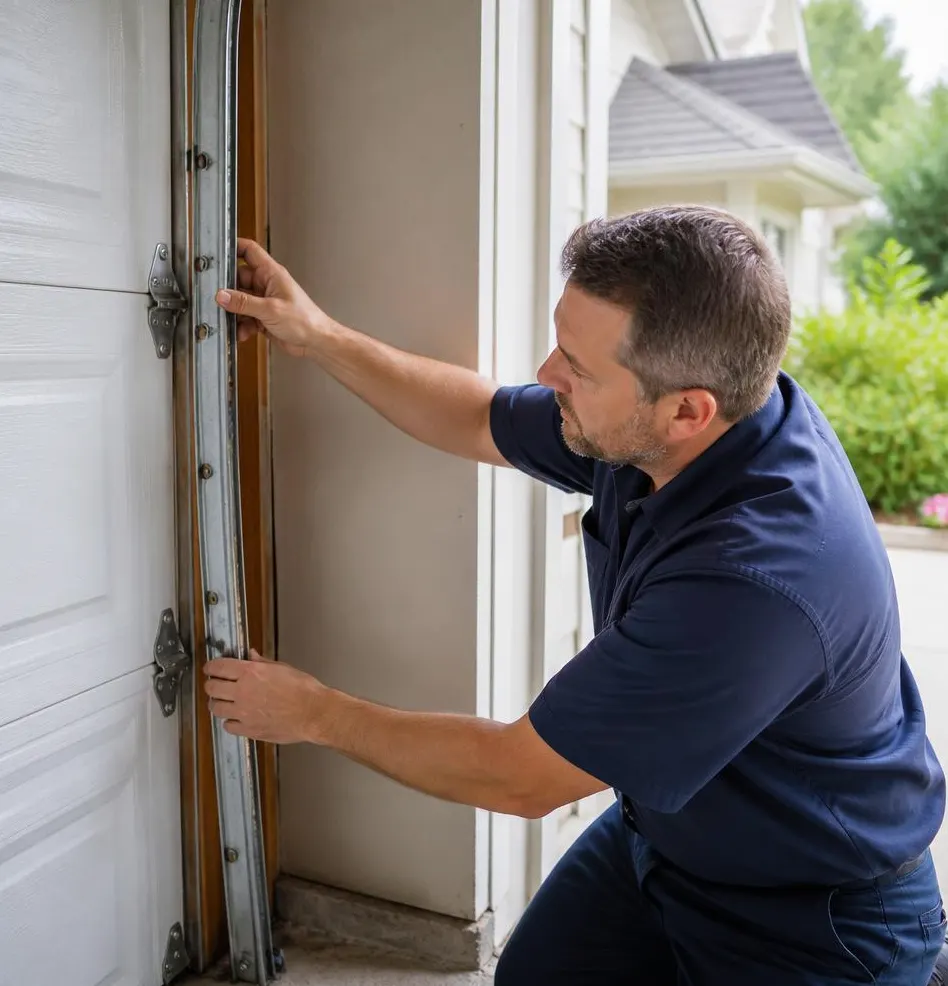
Rule of thumb: if your door has run smoothly all summer, winter prep in this part of Florida is mostly a 20-minute inspection, not a repair job. The exceptions are the ones that matter most — doors near the water dealing with salt-air rust, hardware that took on moisture during a wet summer, and anything that got stressed by storm winds between June and November.
What Hurricane Season Leaves Behind
By November, most of the Nature Coast has made it through the worst of hurricane season, but the storms leave marks even if a door never took a direct hit. Constant pressure changes from high winds can loosen track brackets and hinges over months without anyone noticing. Before you stop thinking about storms until next year, walk the door and check:
- Track brackets and lag screws — tighten anything that spins instead of bites
- Hinges for hairline cracks, especially the center hinges that flex the most
- Bottom seal for tears from debris or standing water during afternoon downpours
- Reinforcement struts on wind-rated doors, making sure nothing shifted out of alignment
Rust and Swelling From a Humid Summer
Months of high humidity and salt air, especially closer to Hernando Beach and the coastal stretches, push moisture into places that don't dry out fast. As the air turns drier in winter, that trapped moisture can finally show itself as rust on springs, rollers, and hinges, or as swelling in wood panels and wood-composite doors. Look for:
- Orange streaking on springs or track — a sign corrosion has already started under the surface
- Panels that no longer sit flush or a door that rubs against the frame it used to clear
- Stiff rollers that don't spin freely when you turn them by hand
A light coat of lithium-based grease on hinges and rollers now, before the drier months set in, does more good than the same treatment in July when humidity just washes it away.
Cooler Mornings Change How Metal Behaves
Florida winter nights can still dip enough to tighten metal components and stiffen lubricant that was fine all summer. If your door has started making a new noise in the cooler morning hours — a pop, a groan, a slight hesitation before it moves — that's often just contraction in the tracks or hardware. It's worth a quick check, but it's rarely an emergency on its own. What is worth addressing: weatherstripping along the bottom and sides that's gone brittle from UV exposure over the summer. Drier air will shrink it further, and a gap that's barely noticeable now can let in enough wind-driven rain during the next storm system to matter.
A Quick Pre-Winter Walkaround
- Open and close the door manually (disconnect the opener first) and feel for binding or uneven resistance
- Check cables for fraying, especially near the bottom bracket
- Test the auto-reverse safety feature by placing a block under the door and closing it
- Clear tracks of sand, salt residue, or leaf debris that built up over storm season
- Listen for new sounds during the first cooler week and note when they happen
When to Call Aripeka Overhead Door Co
If you find active rust on a spring, a cable that's starting to fray, or a door that's binding instead of just making noise, that's past the point of a home fix. Springs under tension and frayed cables are two of the more dangerous DIY mistakes homeowners make, and they're also two of our most common calls this time of year as summer humidity damage finally shows up. We'll handle Garage Door Spring Repair and Garage Door Cable Repair the same day in most cases, and if you want the whole system checked before the dry season settles in, our Garage Door Maintenance & Tune-Up covers lubrication, hardware tightening, and a full safety check in one visit.
If you're in Aripeka, Hudson, New Port Richey, Spring Hill, or anywhere else along the Nature Coast and your garage door is telling you something after a long, humid summer, call Aripeka Overhead Door Co and we'll get it sorted before winter settles in.