
How Long Should a Garage Door Really Last? The Argument-Ending Math
The mistake almost everyone makes first is judging a garage door by its age alone. One spouse says, "It's twelve years old, it's basically done," and the other says, "It still opens every morning, leave it alone." Both are using the same bad shortcut: treating age as the only number that matters. It's tempting because age is the one fact everyone remembers — nobody keeps a logbook of how many times the door has opened, how long it's gone without lubrication, or how many afternoon storms it's shrugged off. But age by itself tells you almost nothing about what's actually left in a door or opener.
The Numbers Nobody Argues With
Here's the baseline, in ranges, not guesses:
- The door itself (track, hinges, panels, frame) typically lasts 15 to 30 years when it's reasonably maintained.
- Springs are rated by cycles, not years — usually 10,000 to 15,000 cycles, which works out to roughly 7 to 12 years for an average household opening the door a few times a day.
- Openers last about 10 to 15 years, but the motor can die well before that if it's constantly fighting a door that's out of balance.
- Cables, rollers, and weatherstripping are wear items on a much shorter clock — often 5 to 10 years before they need attention.
So the honest answer to "how long will it last" is: the door has several different internal clocks running at once, and they rarely reach zero on the same day.
What's Actually Shortening Yours
In this part of Florida, a few specific things eat into those ranges faster than the national averages assume:
- Humidity and swelling. Wood and composite panels absorb moisture in our humid air, then swell and contract as conditions change. That stress loosens fasteners and warps panels years ahead of schedule.
- Salt air corrosion. Closer to the coast, salt in the air attacks exposed hardware — springs, hinges, track bolts — causing rust that weakens metal faster than inland homes ever see.
- Hurricane-season wind load. Every storm cycle puts real stress on the door, the track, and the opener's drive system, especially if the door isn't rated for local wind-load requirements or the hardware has already started to corrode.
- Skipped lubrication. Afternoon downpours and humidity swings mean moving parts need more frequent lubrication here than in a dry climate, not less. Dry, gritty rollers and hinges grind down faster.
- An opener doing a spring's job. When springs weaken and nobody notices, the opener motor compensates by working harder on every cycle. That's the single fastest way to kill an opener early — it's not the opener's fault, but it pays the price.
What Stretches a Door Past Average
The households that get the long end of these ranges tend to do a short list of unglamorous things consistently:
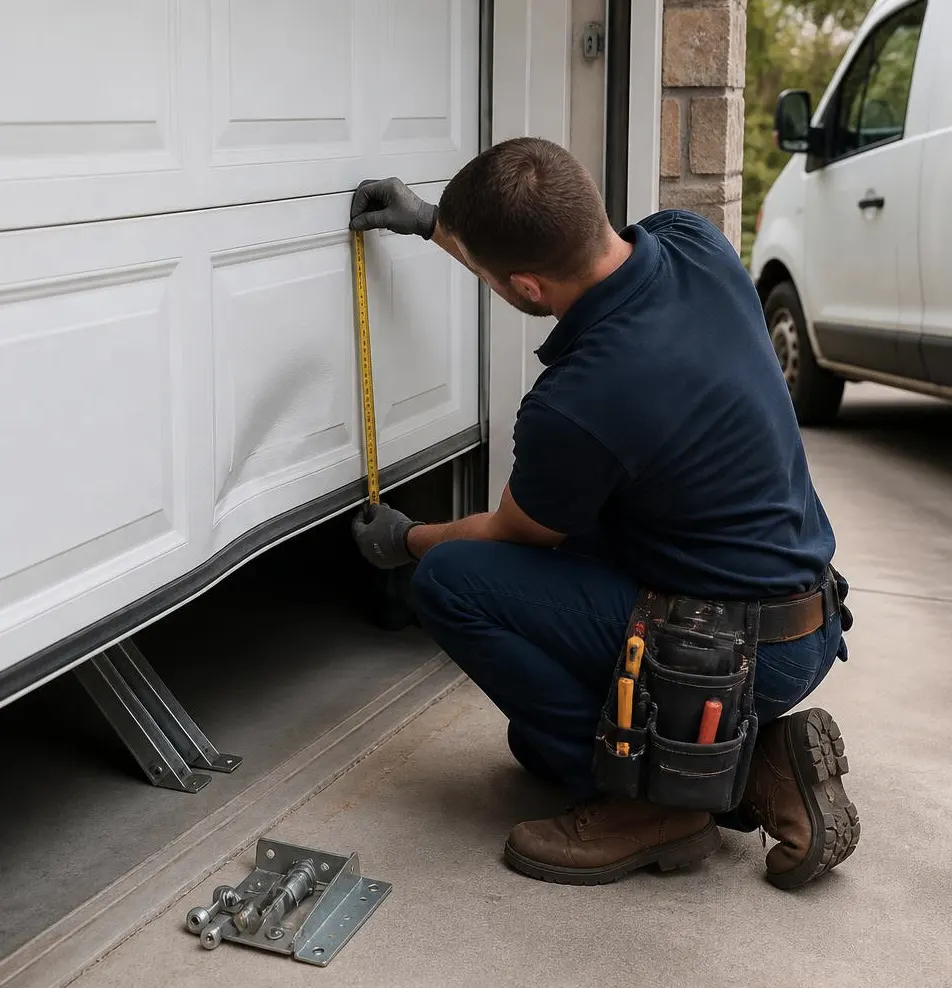
- An annual tune-up that checks spring tension, door balance, and hardware tightness before small issues become big ones.
- Lubricating rollers, hinges, and the track a couple of times a year, more often if the door faces salt air directly.
- Replacing worn weatherstripping promptly, which keeps humidity and wind-driven rain from reaching the opener's electronics and the door's bottom panel.
- Having springs and cables replaced on a schedule based on cycle count, not waiting for one to snap.
- Adding surge protection for the opener, since Florida's storm season brings power surges that quietly shorten the life of circuit boards.
None of this is expensive or complicated. It's the difference between a door that coasts to 25 years and one that starts causing problems at 10.
The Opener Clock Runs Differently
It's worth separating the door from the opener in this argument, because they rarely fail together. A door can be structurally sound well past 20 years while its opener is on its last legs — weak lifting power, a battery backup that no longer holds charge, a circuit board that's taken one too many storm-season surges. Replacing just the opener, while keeping a healthy door and track, is often the more accurate fix than either "replace everything" or "ignore it."
When to Call Aripeka Overhead Door Co
If you're not sure which clock your door is on, that's exactly what a visit settles. Aripeka Overhead Door Co can run a full Garage Door Maintenance & Tune-Up to check spring tension, balance, hardware, and corrosion before anything fails outright. If the opener is the weak link — slow response, dying battery backup, storm-surge damage — we handle Garage Door Opener Installation with hardware suited to our humidity and wind conditions. Either way, you get a straight answer about what's actually left in the door, not a guess based on its birthday.
If you're in Aripeka, Hudson, New Port Richey, Port Richey, Spring Hill, Bayonet Point, Holiday, or Hernando Beach and want a real answer to how much life your door and opener have left, call Aripeka Overhead Door Co for a tune-up before the next storm rolls in.